
Bringing home a new puppy or kitten is pure excitement - those little paws, the goofy energy, and all the cuddles that come with it. But along with the fun comes the real job of giving them the best start possible.
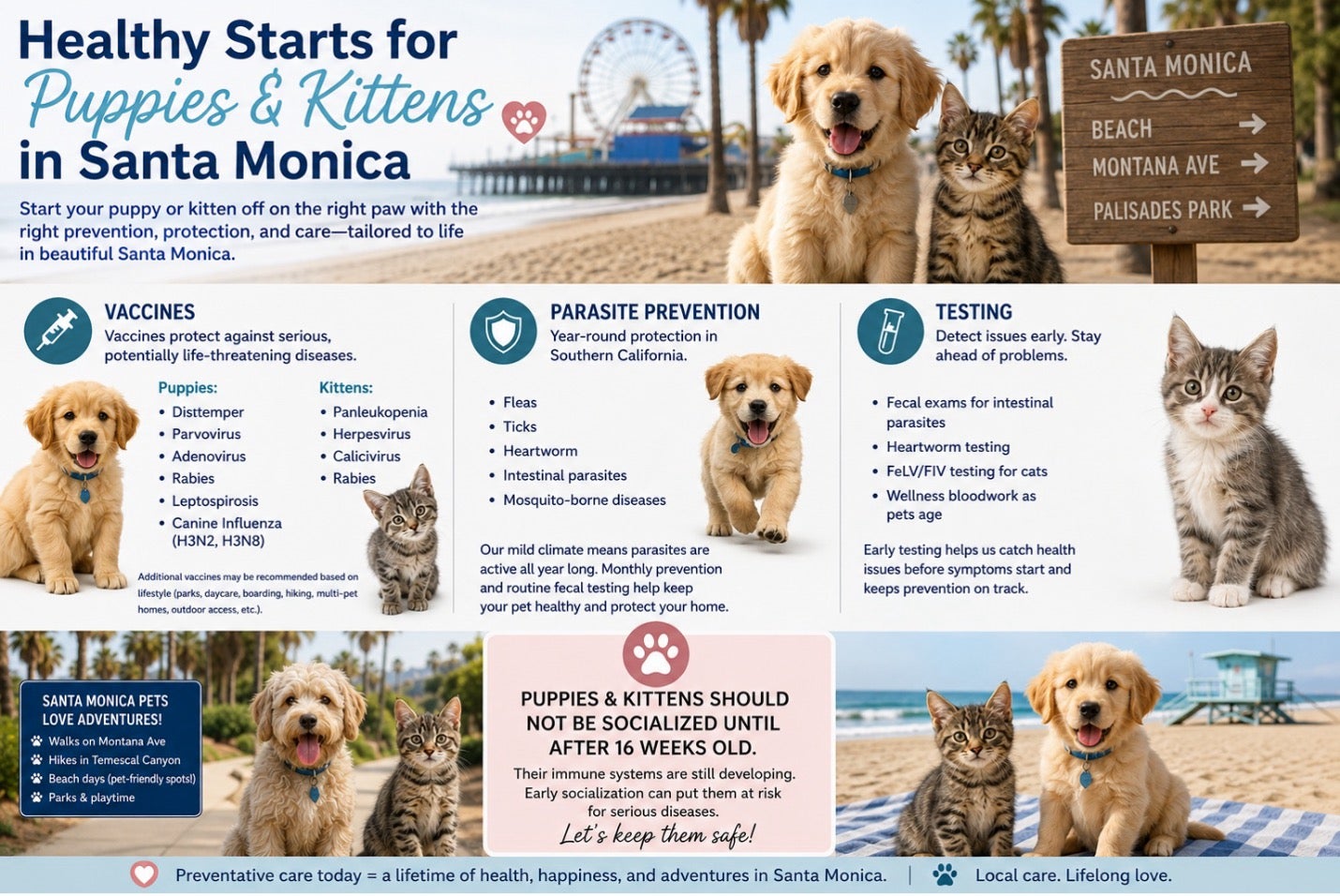
Here in Santa Monica, our pets live pretty social lives. Walks on Montana Avenue, beach trips, apartment buildings, dog-friendly patios, parks, groomers, and daycare mean puppies and kittens meet the world early. That is why vaccines, parasite prevention, and regular testing matter so much in Southern California.
For puppies, the core vaccines protect against distemper, parvovirus, adenovirus, and rabies. We also strongly recommend leptospirosis and canine influenza shots in this area, especially for dogs that will be at daycare, boarding, hiking, or hanging out in public spots. Canine flu outbreaks do pop up in LA County, and leptospirosis spreads through wildlife and standing water - even in the city. For kittens, core vaccines cover panleukopenia, herpesvirus, calicivirus, and rabies. Some also need feline leukemia testing and vaccination depending on their lifestyle.
A common mistake is thinking you should rush them into full socialization right after bringing them home. Gentle exposure to new sights and sounds around the house is great, but hold off on unknown animals or public pet areas until they’re around 16 weeks and have finished their vaccine series. Their immune systems are still building up, and early exposure can lead to serious issues like parvo in puppies or nasty respiratory infections in kittens. In Santa Monica, with dogs sharing sidewalks, parks, and grassy spots everywhere, it’s smart to be extra cautious those first few months. You can still do safe socialization: carry your pup in public, set up playdates with known healthy vaccinated dogs, and focus on positive experiences at home.
Parasite prevention is key year-round here because of our mild weather—fleas, mosquitoes, ticks, and intestinal worms don’t take a break. Even indoor pets pick up fleas in apartment buildings or shared outdoor spaces. Puppies and kittens are often born with worms, so we recommend early fecal testing. Monthly preventatives keep fleas, heartworm, intestinal parasites, and tick-borne diseases from becoming problems.
Heartworm prevention is especially important. A lot of people think it’s only a humid-state issue, but mosquitoes are active year-round in LA County and we do see cases. Prevention is easy and cheap; treatment is tough on the pet and expensive.
To make those first months less overwhelming, every new puppy and kitten gets enrolled in our WellPet Program. It bundles the important stuff - vaccines, parasite prevention, nail trims, anal glands—so costs stay manageable and you can focus on enjoying your new family member instead of stressing over every visit.
These early appointments cover way more than shots. We talk nutrition, teething, training, behavior, litter box setup, safe exercise, and whatever questions you have. Every pet and every household is different, so we tailor the plan to your Santa Monica lifestyle—whether that means beach walks and trails for your dog or cozy apartment life for your kitten. Getting the preventative care right from the start really sets them up for a long, healthy life together.
Puppy and Kitten Vaccination Schedules in Santa Monica
Here’s a clear breakdown of typical schedules based on current AAHA and AAFP guidelines, tailored to our high-socialization lifestyle in Southern California. Exact timing can vary by individual pet, health status, and risk, so we customize these at the clinic.
Puppy Vaccination Schedule (typically starting at 6–8 weeks)
Core Vaccines (recommended for all dogs):
- DHPP/DAPP (Distemper, Adenovirus/Hepatitis, Parvovirus, ± Parainfluenza): Series of 3–4 doses, given every 3–4 weeks from 6–8 weeks old, with the final dose no earlier than 16 weeks. This is critical—the last shot in the series is the most important because maternal antibodies usually drop enough by then for the puppy to build strong immunity.
- Leptospirosis (now often considered core, especially in LA County): Two doses, 2–4 weeks apart, starting at 12 weeks. Annual boosters recommended due to wildlife, standing water, and urban exposure.
- Rabies: One dose at 12–16 weeks (required by law in California), with a booster 1 year later, then every 1–3 years depending on the vaccine.
Lifestyle Vaccines (strongly recommended here):
- Canine Influenza (CIV): Two doses, 2–3 weeks apart, starting around 8–12 weeks for dogs in daycare, boarding, grooming, or public areas. Outbreaks happen in LA County.
- Bordetella (kennel cough): Often given intranasally or orally as early as 6–8 weeks, especially for social dogs. Boosters every 6–12 months.
After the puppy series, we do a booster at 1 year, then most core vaccines move to every 3 years for low-risk adults (titers can help decide).
Kitten Vaccination Schedule (starting at 6–8 weeks)
Core Vaccines (recommended for all cats):
- FVRCP (Panleukopenia, Herpesvirus, Calicivirus): Series every 3–4 weeks from 6–8 weeks until 16–18 weeks old. Final dose at 16+ weeks is key. A booster at 6 months is sometimes added.
- Rabies: One dose at 12–16 weeks, booster 1 year later, then every 1–3 years.
Lifestyle/Additional:
- Feline Leukemia (FeLV): Two doses, 3–4 weeks apart, starting at 8 weeks. Strongly recommended for kittens in Santa Monica because lifestyles can change (outdoor access, multi-cat homes). Test first, then vaccinate if negative. Boosters based on ongoing risk.
After the kitten series, a 1-year booster, then most move to every 3 years for indoor adults.
Key Points for Santa Monica Pet Parents
- Why wait until after 16 weeks for full socialization? Maternal antibodies can interfere with early vaccines, leaving a window of vulnerability. Full protection ramps up after the final series dose.
- LA-specific risks: Year-round mosquitoes (heartworm + potential for other issues), canine flu in group settings, leptospirosis in urban/wildlife interfaces, and dense dog/cat populations on sidewalks, parks, and beaches.
- Our WellPet Program: Provides discounts to puppies and kittens on vaccines, flea & tick control and pre spay and neuter lab work. Benefits last until 18 months of age.
These are general guidelines—your puppy or kitten’s schedule may shift based on breed, health, previous exposure, or specific risks. Bring them in for that first visit as soon as you get them home so we can map out the exact plan. Early, consistent preventative care is the easiest way to avoid expensive problems later.
Questions about your new companion? Call us at Santa Monica Pet Medical Center!